
'This market is very expensive in some pockets, dirt cheap in some, and the belly of the market is reasonably valued.'

Equities in India saw record FPI inflows of $16.8 billion in November and December, taking the benchmark indices to new highs.

2019 appears a story of two halves for Indian equities - a more difficult first half might precede a stronger second half, said Abhiram Eleswarapu, bottom, left, Head of India Equity Research, BNP Paribas in an interview with Ashley Coutinho.
PowerGrid was the top laggard in the Sensex pack, shedding over 2 per cent, followed by HCL Tech, ONGC, M&M, Axis Bank, TCS, Reliance Industries and Infosys. On the other hand, Asian Paints, Titan, Tata Steel, Bajaj Finance and Bajaj Auto were among the gainers.
The S&P BSE 500 index, which accounts for 94% market capitalisation of BSE listed companies, has gained 45% from its March 24 low. However, out of the BSE 500 index stocks, 225 have underperformed the index by gaining less than the broader index during this period.

Former Reserve Bank of India (RBI) Governor Raghuram Rajan says the government should take advantage of the peaks in the Indian equity markets right now and sell stakes in PSUs while prioritising spending to get the economy back on track. The upcoming Budget for the fiscal year beginning April 1 should look to provide "relief to the poorer households and small and medium enterprises," he said. And then move on to getting the economy back on track.

Dhanteras has cheered up jewellers as it has turned out to be the best in three years, thanks to the lower price of the yellow metal and pent-up demand. In Mumbai's Zaveri bazaar, buyers came in out force and jewellers did not have to depend on freebies to induce sales, even though all of them had announced some offers. In fact, more discounts were announced for diamond and studded jewellery.

The Bank of Japan's action has nullified the effects of the end of the US' quantitative easing programme but the dependence of foreign institutional investors remains a concern

'Investors need to expect steady returns over the next one to two years with bouts of high volatility.'

Equity investors grew richer by Rs 32.49 lakh crore in 2020 on the back of smart returns in the stock market which had a roller-coaster ride during the year hit by the coronavirus pandemic. The COVID-19 outbreak ravaged lives and livelihoods on a global scale, shuttering businesses and jolting world equities. But amid all the gloom, Indian stock indices gave hope of returning to winning ways towards the latter part of the year.

Inflation is down and there's every chance that crude prices will be subdued through the next year.

Equity markets braved all odds this fiscal and rewarded investors with high returns as the benchmark Sensex surged more than 66 per cent despite COVID-led disruptions and concerns over its impact on the economy. Market analysts termed FY 2020-21 as a roller coaster ride for not only Indian markets but also for equity indices globally due to the pandemic. In an unprecedented come back, the 30-share BSE Sensex has jumped 19,540.01 points or 66.30 per cent so far this fiscal. This extraordinary rally holds significance as markets faced volatile trends this fiscal.

IndusInd Bank was the top gainer in the Sensex pack, zooming around 8 per cent, followed by PowerGrid, Dr Reddy's, Sun Pharma, NTPC and Axis Bank. On the other hand, UltraTech Cement, Maruti, ITC, Kotak Bank and Asian Paints were among the losers.

NSE Nifty finished higher by 46.05 points, or 0.39 per cent, at 11,707.90. Asian Paints was the top gainer in the Sensex pack, rallying 6.32 per cent, followed by Nestle India, HUL, Bajaj Auto, IndusInd Bank, Tata Steel, Maruti and PowerGrid.

FIIs pump in $1.4 billion in March, after pulling out $2.9 billion in Jan-Feb.

Bharti's ratings headroom is likely to improve with an equity infusion, planned asset sales and growing EBITDA from Africa.

Indian equity markets registered their highest single-day percentage gains since early October.

Bolstered by bullish investor sentiments, India witnessed companies mopping up a whopping $9.7 billion through initial share sales in the first nine months of 2021, the highest amount for the nine-month period in two decades, says a report. As many as 72 initial public offerings (IPOs) hit the stock market during the January-September period this year in India and strong sentiments were visible in the global markets as well, according to leading consultancy EY. EY, in its latest report, said the global IPO market continued to boom through Q3 2021 resulting in the most active third quarter by deal numbers and proceeds in the last 20 years.

'Generic skills are in abundance, but technological advancements have left staple skills redundant.' 'It is why employers are now looking for alternate sources of hiring -- deploying gig workers, looking at Tier 2 and Tier 3 cities for relevant talent.'

Year 2017 will be a benign year for FII flows into India feels Akash Singhania, deputy chief investment officer, DHFL Pramerica Asset Managers.

We still have time for this government to take action.

It is useful to note that Indian markets have not gone into a tailspin as the Greece crisis has developed, says Devangshu Datta.

Wait for a few days before deciding to buy shares or MF schemes.

The market last tumbled 10% or more in December 2016 following demonetisation. The decline was followed by a sharp rebound. This time the chances of such a v-shaped recovery are less.
Markets will remain closed today on account of voting for the general elections in Mumbai constituencies.

Bajaj Finance was the top loser in the Sensex pack, tanking over 10 per cent, followed by Axis Bank, Maruti, M&M, Tech Mahindra and ONGC. The gainers included ITC, Bharti Airtel, Kotak Bank and Hero MotoCorp.

The sentiment around Indian equities remains positive and unchanged.

Healthy demand for the American unit from importers and corporate weighed on the rupee
.jpg)
Traders say the outlook for the rupee has improved on the back of a sharp narrowing in the current account deficit after government and central bank emergency measures such as curbing gold imports.

Unlike last year, investors turn cautious on e-commerce sector.
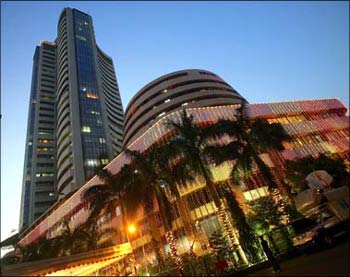
It will be difficult for the Indian equity to outperform overall growth to the extent bullish observers expect.

At the BSE, 1,879 companies declined, while 685 advanced and 131 remained unchanged.

Financial shares were the top losers.
Meanwhile, IT index continues to be the top loser down 3.8%. Financial stocks witnessed renewed buying interest at lower levels.

Not surprisingly, equity investors are bidding-up stock prices across sectors and the broader market is now more valuable than pre-Covid levels.

Top gainers in the Sensex pack included Bharti Airtel, Tata Motors, IndusInd Bank, Kotak Bank, Hero MotoCorp, Asian Paints and PowerGrid, which rose up to 2.53 per cent.

A rebound in oil prices, FII outflows and concerns over current account deficit weighed on the domestic currency, pushing it to fresh life-time lows.

The rupee had eased by 2 paise to close at fresh 2-month low of 62.78.

The BSE Midcap ended up 0.5% while the Smallcap index ended nearly 1% higher
The answer to that depends on whether the globe is able to contain the virus spread, says Samie Modak.
